Cognitive function and consumption of fruit and vegetable polyphenols in a young population: is there a relationship?
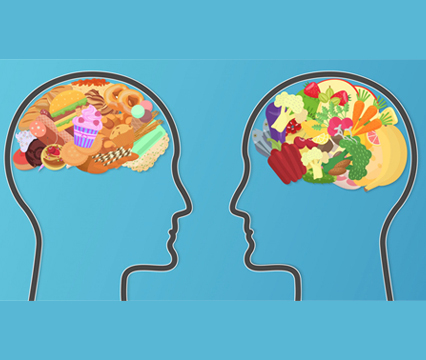
The link between polyphenols in fruits and vegetables and cognitive function in young people was explored in this review. Carrillo et al (2019) focused particularly on memory (immediate and working) and attention (sustained and selective). The mechanism in which polyphenols exert their positive cognitive effect is discussed in this paper. Neuronal plasticity is increased in the hippocampus part of the brain and thus pathways of signaling and transcription factors (ERK/Akt) are modulated. Also, blood flow to the cerebrum is enhanced, as well as levels of nitric oxide and oxygenation in the blood. [NPID: cognition, fruits, vegetables, FV intake, cognitive function, young people, memory, working memory, immediate memory, attention, sustained attention, selective attention, polyphenols, neuronal plasticity, hippocampus, cerebrum, nitric oxide, oxygenation]
Year: 2019
Reference: Carrillo, J. Á., Zafrilla, M. P., & Marhuenda, J. (2019). Cognitive Function and Consumption of Fruit and Vegetable Polyphenols in a Young Population: Is There a Relationship?. Foods (Basel, Switzerland), 8(10), 507. https://doi.org/10.3390/foods8100507
Related Studies
Recent evidence points to poor executive function (EF) as a predisposing factor to obesity in young individuals, evidenced by the links between disinhibited eating behaviors observed in individuals with poor EF, however, the underlying mechanisms behind this relationship remain poorly understood. Bryne et al. (2021) propose the use of network analysis as a novel approach […]
Seafood contains vital nutrients like long-chain fatty acids, selenium, and iodine, which are essential for neurodevelopment and cognitive function. However, the link between childhood seafood consumption and cognitive outcomes remains insufficiently studied. This study by Nel et al. (2025) explored how seafood intake at age 7 relates to cognitive and behavioral outcomes between ages 7 […]
 Navigation